Blade Server
Blade Server
Introduction
Blade servers are designed to address the growing demand for high-performance computing within constrained data center environments. By consolidating multiple server nodes into a shared chassis, blade server architecture enables enterprises to optimize space utilization, power efficiency, and centralized management.
In modern data centers, blade servers play a strategic role in supporting virtualization, private cloud platforms, and performance-intensive workloads. Their modular design aligns with enterprise requirements for scalability, operational consistency, and infrastructure standardization.
What Is a Blade Server?
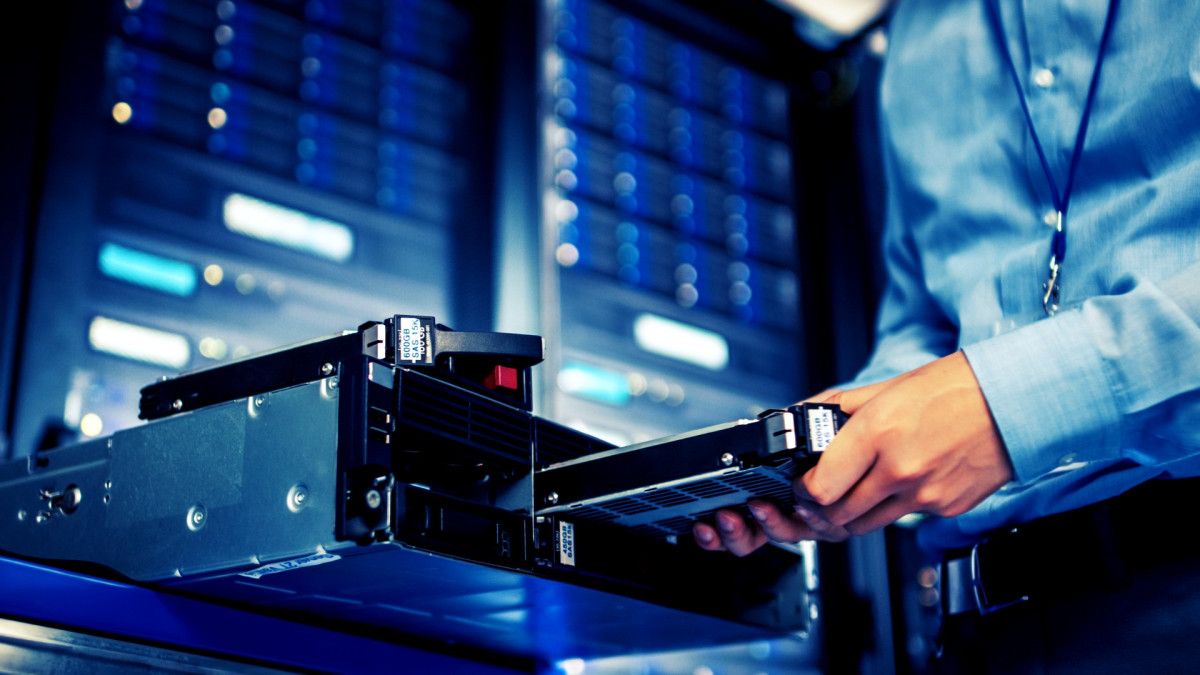
A blade server is a compact, modular server designed to operate within a shared enclosure known as a blade chassis. Each blade functions as an independent server with its own processors, memory, and local storage, while relying on the chassis for shared power, cooling, networking, and management resources.
This architecture reduces physical redundancy and simplifies infrastructure deployment and operations.
Key functional aspects include:
Modular server design: Independent server nodes within a shared chassis.
Shared infrastructure resources: Power, cooling, and networking consolidated at the chassis level.
High-density deployment: Increased compute capacity per rack unit.
Centralized management: Unified control and monitoring of all blades.
Rapid scalability: Easy addition or replacement of server blades.
The Historical Evolution of Blade Servers
Blade server architecture evolved as a response to the limitations of traditional rack-mounted servers in dense computing environments.
Key development phases include:
Rack server era: Standalone servers with dedicated power and cooling.
Early blade systems: Introduction of shared chassis concepts to reduce overhead.
Virtualization-driven adoption: Increased use in virtualized and private cloud environments.
Integrated blade platforms: Enhanced networking, management, and automation capabilities.
Converged and hyper-converged influence: Alignment with software-defined infrastructure models.
Why Blade Servers Emerged
Blade servers emerged to solve efficiency and scalability challenges in enterprise data centers.
Primary drivers and challenges addressed include:
Data center space constraints: Need to maximize compute density.
Power and cooling inefficiencies: Reducing redundant infrastructure components.
Operational complexity: Simplifying server deployment and maintenance.
Growing virtualization workloads: Demand for scalable compute platforms.
Standardization requirements: Consistent hardware configurations across environments.
Core Characteristics of Blade Server Systems
Blade server systems are defined by architectural features that support enterprise-scale operations.
Essential characteristics include:
High compute density: Large number of servers within a small physical footprint.
Centralized power and cooling: Improved efficiency and reduced cabling.
Integrated networking: High-speed internal connectivity through chassis backplanes.
Unified management interfaces: Centralized provisioning, monitoring, and control.
Hardware consistency: Standardized components and configurations across blades.
Key Domains or Components of Blade Server Architecture
Blade server environments consist of several tightly integrated components.
Primary components include:
Blade chassis: Enclosure providing shared infrastructure resources.
Server blades: Individual compute nodes with CPU, memory, and storage.
Backplane and interconnects: High-speed internal communication fabric.
Power and cooling modules: Centralized energy and thermal management.
Management modules: Central control systems for configuration and monitoring.
Network and storage fabrics: Integrated connectivity to external systems.
Blade Servers in Enterprise and Infrastructure
Blade servers are widely deployed in enterprise data centers to support compute-intensive and virtualized workloads.
Common enterprise use cases include:
Virtualization platforms: Hosting large-scale virtual machine environments.
Private cloud infrastructure: Compute foundation for internal cloud services.
Enterprise application hosting: ERP, databases, and middleware platforms.
High-performance computing clusters: Dense compute environments for analytics.
Development and testing environments: Rapid provisioning of standardized servers.
Challenges and Strategic Considerations
While blade servers offer significant advantages, they introduce strategic considerations that must be addressed during planning and deployment.
Key challenges include higher initial investment costs, chassis-level dependency risks, vendor lock-in, scalability limits within a single chassis, and power density management. Enterprises must carefully evaluate workload requirements, growth projections, and integration with existing data center architectures.
Conclusion
Blade server architecture provides a high-density, efficient, and centrally managed compute platform for modern enterprise data centers. Its modular design and shared infrastructure model enable organizations to scale compute capacity while improving operational efficiency.
When aligned with a well-defined data center strategy, blade servers serve as a reliable foundation for virtualization, private cloud, and performance-driven enterprise workloads.